Punjab News:Punjab Govt Launches SANGAT Mental Health Clubs In 40 Colleges To Strengthen Youth Wellbeing & Prevent Drug Abuse
Punjab News:Punjab Govt Launches SANGAT Mental Health Clubs In 40 Colleges To Strengthen Youth Wellbeing & Prevent Drug Abuse
*• SANGAT Is Designed By Youth, For Youth, To Promote Peer Support & Healthier Choices: Harjot Singh Bains*
*• Mental Health Awareness & Early Intervention Key To Punjab’s Fight Against Drugs: Harjot Singh Bains*
*• 25 Students From Each College To Receive Mental Health First Aid Training Under Partnership With Aditya Birla Education Trust*
*• Initiative Under Yudh Nashean Virudh Aims To Promote Early Intervention, Peer Support And Awareness Around Substance Abuse*
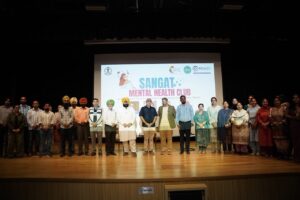
The Punjab Government has launched SANGAT Mental Health Clubs in 40 colleges across the state to strengthen mental health awareness among young people, encourage early intervention and help prevent substance abuse under its flagship ‘Yudh Nashean Virudh’. Led by the Department of Higher Education in partnership with the Aditya Birla Education Trust (ABET), the initiative aims to create supportive campus environments where students can recognise emotional distress, access appropriate assistance and discuss mental health issues without stigma.
During the launch, Punjab Education Minister Harjot Singh Bains and former Delhi Deputy Chief Minister Manish Sisodia interacted with club participants and discussed the role of educational institutions in advancing youth empowerment. The discussions underlined the importance of collaboration among educational institutions, families and peer networks in reducing stigma, encouraging young people to seek help and addressing substance abuse.
Speaking at the launch event held at Plaksha University, Mohali, Education Minister Harjot Singh Bains said SANGAT was a significant step towards empowering young people to address mental health challenges and substance abuse through awareness, peer support and collective action. “Even Arjuna, one of the greatest warriors, faced mental and emotional challenges despite having Lord Krishna by his side. This reminds us that young people, too, need the right guidance and mentors. Taking drugs is not a matter of pride; helping someone find their way back from the wrong company is. SANGAT is designed by the youth, for the youth, to encourage peer support, promote mental wellbeing and help young people make healthier choices,” he said.
Neerja Birla, Founder and Chairperson of the Aditya Birla Education Trust and Mpower, emphasised the need for sustained preventive interventions to address the intersection of emotional distress, mental health concerns and substance use among young people. “The challenges faced by youngsters today extend beyond substance abuse. Growing concerns around emotional wellbeing and mental health make early intervention more important than ever. At Mpower, through our work with COPE, we have seen how emotional distress, untreated mental health concerns and substance use can intersect, underscoring the need for sustained, preventive interventions,” she said.
Commending the Punjab Government for its collaborative approach, Birla said, “I commend the Government of Punjab for bringing together government departments, civil society organisations, educators, healthcare professionals and community leaders with a shared vision to move beyond isolated efforts and build a sustainable ecosystem for prevention, treatment, rehabilitation and reintegration. Such collaborative models have the potential to create a lasting and meaningful impact on the lives of Punjab’s youth and their families.”
Sharing his own journey and highlighting the importance of mental health, Aparshakti Khurana emphasised the need to create supportive spaces where young people can speak openly about their struggles. “We often tell young people to be strong, but strength also means being able to speak honestly about what you are going through and ask for help when you need it. The pressures young people face are not always visible, making it important for friends, families and educational institutions to create spaces where they feel heard rather than judged,” he added.
“No matter how many challenges keep coming up, my dadi (grandmother) used to say, ‘Achi sangat bohot zaruri hai.’ Initiatives such as SANGAT can encourage young people to look out for one another and make mental health a more open conversation,” he said.
Under the programme, 25 students from each participating college will receive 14 hours of Youth Mental Health First Aid (YMHFA) training and certification. The training will equip students to recognise signs of emotional distress, provide initial peer support and guide fellow students towards professional assistance whenever required.
The clubs will organise campus-level activities to promote mental wellbeing, encourage open conversations about emotional challenges and discourage substance use. Through peer-led engagement and links to professional support, the initiative seeks to identify concerns at an early stage and build a campus culture in which seeking help is encouraged rather than stigmatised.
The programme is being implemented through Mpower, a subsidiary of ABET, under its COPE (Counselling and Outreach for Peer Empowerment) framework.
The launch event featured Nikhil Taneja, co-founder and chief of Yuvaa, and Bollywood actor Aparshakti Khurana, who participated in conversations on youth wellbeing and the importance of creating spaces where young people feel heard, understood and supported. Punjabi comedian Manpreet Singh, popularly known as The Comic Singh, also performed at the event.
Education officials, nodal professors from participating colleges, SANGAT student members and representatives of ABET attended the programme.
By placing mental wellbeing at the centre of its preventive strategy, SANGAT seeks to empower students to support their peers, strengthen early intervention and foster more open and supportive college campuses. The initiative forms part of the Punjab Government’s broader efforts under Yudh Nashean Virudh to tackle substance abuse through prevention, awareness and collective responsibility.