
Punjab News:‘Trade Meet 2026’ Organised in Chandigarh by Ahmedabad, Ambala and Firozpur Railway Divisions in Association with Central Warehousing Corporation to Boost Rail Freight Transportation and Trade Between Gujarat, Punjab and Haryana
Punjab News:‘Trade Meet 2026’ Organised in Chandigarh by Ahmedabad, Ambala and Firozpur Railway Divisions in Association with Central Warehousing Corporation to Boost Rail Freight Transportation and Trade Between Gujarat, Punjab and Haryana
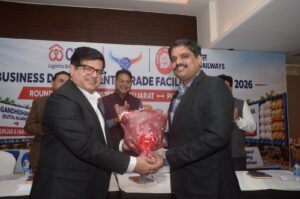
**DRM Ahmedabad Shri Ved Prakash Says: “Indian Railways Is Not Merely a Mode of Freight Transportation, but a Trusted Partner in the Progress of Farmers, Traders, Industries and Exporters”**
**Special Emphasis on Strengthening Connectivity Between Gujarat’s Ports and the Agricultural and Industrial Hubs of Punjab and Haryana, with a Focus on Increasing Two-Way Freight Movement**
**Railways and CWC to Collaborate on Developing Cost-Effective, Reliable and Environmentally Sustainable Logistics Solutions**
**Extensive Deliberations on Rail Transportation of Rice, Potatoes, Timber, Iron and Steel, Modern Warehousing, Freight Terminals, and First- and Last-Mile Connectivity**
With the objective of accelerating trade between Gujarat, Punjab and Haryana, promoting rail-based freight transportation and reducing logistics costs, **Trade Meet 2026** was organised jointly by the Ahmedabad Division of Western Railway, the Ambala and Firozpur Divisions of Northern Railway, and the Central Warehousing Corporation (CWC) on Friday, November 20, 2026, at Hotel Taj, Chandigarh.
The event was attended by **Shri Rabindra Kumar Agarwal, Chairman, Central Warehousing Corporation; Shri Ved Prakash, Divisional Railway Manager (DRM), Ahmedabad; Shri Vinod Bhatia, DRM, Ambala; and Shri Annu Tyagi, Senior Divisional Commercial Manager, Ahmedabad**, along with senior officials of Indian Railways and CWC and representatives from the freight transportation and industrial sectors.
Farmers, traders, rice mill operators, industrialists, exporters, importers, transporters and logistics service providers also participated in the conference.
The trade meet focused on exploring new opportunities for strengthening freight connectivity between the Gandhidham (Kutch) and Mehsana regions of Gujarat and the major agricultural, industrial and commercial centres of Punjab and Haryana. Special attention was given to developing sustainable and commercially viable two-way freight transportation corridors.
Transformation of Indian Railways Is Accelerating India’s Economic Growth: DRM Shri Ved Prakash
Addressing the gathering, **Shri Ved Prakash, Divisional Railway Manager, Ahmedabad Division**, stated that Indian Railways is undergoing a historic transformation.
He highlighted that modern railway infrastructure, extensive electrification, Dedicated Freight Corridors, advanced freight terminals, high-capacity electric locomotives and innovative freight transportation technologies are significantly strengthening the country’s economic foundation.
He said:
**“Today, the role of Indian Railways is no longer limited to transporting passengers and goods from one place to another. Railways is playing a crucial role in driving economic growth, supporting industrial expansion, creating new markets for agricultural products and enhancing the global competitiveness of Indian goods. Our objective is to reduce transportation costs for traders, provide farmers with access to larger markets, improve connectivity for industries and ensure reliable logistics facilities for exporters.”**
Shri Ved Prakash further emphasised that increasing investments in railway infrastructure, large-scale electrification, modern freight handling facilities and technological innovations are transforming Indian Railways into a key driver of an efficient, integrated and sustainable logistics ecosystem.
Two-Way Freight Movement to Reduce Costs and Improve Railway Efficiency
Highlighting the immense potential for two-way freight transportation between Gujarat, Punjab and Haryana, DRM Shri Ved Prakash stated that ensuring adequate cargo availability in both directions is essential for improving the utilisation of freight trains and railway assets.
He said:
**“If freight trains transport rice, potatoes, foodgrains and export containers from Punjab and Haryana to Gujarat, our endeavour should be to ensure that these trains carry imported timber, salt, fertilisers, industrial products and import containers from Gujarat to North India on their return journey. This will reduce empty rake movement, improve wagon utilisation and make freight transportation more cost-competitive.”**
He explained that the objective is not merely to increase freight movement in one direction but to establish a balanced and regular transportation model that benefits traders, industries and Indian Railways alike.
Such an approach would improve operational efficiency, optimise railway resources and create new opportunities for businesses across the three states.
Immense Trade Potential Between Gujarat’s Ports and Northern India’s Commercial Centres
Shri Ved Prakash highlighted that Punjab and Haryana are among India’s major agricultural and industrial producing states, while Gujarat serves as one of the country’s most important industrial and maritime trade gateways.
He referred to the strategic significance of **Kandla, Mundra and Tuna-Tekra ports**, the timber and salt clusters of Gandhidham, the potato-producing belt of Palanpur–Deesa, and the industrial hubs of Ahmedabad–Sanand.
He stated:
**“Indian Railways can play a significant role in transporting agricultural and industrial products from Punjab and Haryana to Gujarat’s ports, while facilitating the movement of imported commodities from these ports to markets across North India. By developing regular and balanced freight movement along these trade corridors, we can generate substantial benefits for farmers, traders, industrialists and exporters.”**
He emphasised that improved rail connectivity between ports, agricultural production centres, industrial clusters and consumption markets would strengthen supply chains and facilitate the expansion of domestic and international trade.
Railways and CWC to Work Together on End-to-End Logistics Solutions
DRM Shri Ved Prakash stressed the importance of stronger coordination between Indian Railways and the Central Warehousing Corporation to address the evolving requirements of the trade and logistics sectors.
He observed that businesses today require comprehensive supply-chain solutions rather than transportation services limited to railway station-to-station movement.
He said:
**“Today’s trader expects goods to be transported safely and efficiently from farms, factories, rice mills or warehouses to buyers, ports or final markets. To meet these expectations, Indian Railways, the Central Warehousing Corporation and logistics companies must work together to develop integrated end-to-end transportation solutions.”**
He highlighted that modern freight terminals, scientific warehousing, cargo aggregation, safe handling facilities and improved first- and last-mile connectivity can make rail transportation more accessible and economical for small and medium-sized businesses.
**“We want Indian Railways to become the preferred logistics partner not only for large industries but also for small traders, farmers and local entrepreneurs,”** he added.
He further emphasised the need to integrate railway freight infrastructure with warehousing and distribution networks to provide seamless logistics services.
Lower Transportation Costs and Reduced Carbon Emissions Through Sustainable Freight Solutions
Highlighting the economic and environmental advantages of rail freight transportation, Shri Ved Prakash stated that railways offers an efficient solution for transporting large volumes of goods over long distances.
He said:
**“Our vision is clear—lower costs, reduced carbon emissions, higher transportation capacity and greater reliability. When more freight is shifted from roads to railways, it not only helps reduce transportation costs but also promotes energy conservation, environmental protection and sustainable development.”**
He referred to modern electric locomotives, specialised freight wagons, containerised transportation and Gati Shakti Cargo Terminals as important initiatives supporting the modernisation of India’s freight transportation ecosystem.
He stated that Indian Railways is continuously working towards developing customised freight solutions to meet the diverse requirements of industries, agricultural producers, exporters and logistics operators.
Trade Data Highlights Significant Opportunities for Rail-Based Freight Transportation
During the trade meet, GST-based trade data and estimates covering the period from **April 2022 to March 2024** were presented to highlight potential freight transportation opportunities between Gujarat and Northern India.
According to the data presented, the following commodity movements were identified:
– **Iron and Steel:** Approximately 3.34 million tonnes (33.4 lakh tonnes) from Gandhidham towards Punjab and Haryana.
– **Timber and Wood Products:** Approximately 220,000 tonnes (2.2 lakh tonnes) from Gandhidham towards Northern India.
– **Rice:** Approximately 6.03 million tonnes (60.3 lakh tonnes) from Punjab and Haryana towards Kutch.
– **Rice from Karnal:** Approximately 3.87 million tonnes (38.7 lakh tonnes) from Karnal alone towards Kutch.
– **Potatoes:** An estimated seasonal trade potential of approximately 70,000 tonnes from Punjab and Haryana towards the Mehsana region.
These figures highlighted substantial commodity flows and the potential demand for rail-based freight transportation along the identified trade corridors.
The data also indicated opportunities for developing new freight services, improving cargo consolidation and creating commercially viable logistics arrangements.
DRM Invites Traders and Industries to Share Their Freight Transportation Requirements
During the interactive session, DRM Shri Ved Prakash encouraged traders, rice mill operators, potato producers, timber merchants, industrialists and exporters to share their actual freight transportation requirements with the railway administration.
He said:
**“We invite you to tell us where your cargo originates, the quantity available, its destination, seasonal demand patterns and the facilities required for transportation. In coordination with the Ambala and Firozpur Railway Divisions and the Central Warehousing Corporation, we can examine these requirements and work towards developing practical and commercially viable logistics solutions.”**
He explained that the purpose of the trade meet was not merely to showcase existing railway freight services but also to understand industry requirements, identify operational challenges and explore new business opportunities.
He emphasised that continuous engagement between Indian Railways, CWC and the business community would be essential for developing efficient and sustainable freight transportation networks.
### Modern Logistics Infrastructure Will Play a Crucial Role in Achieving the Vision of Viksit Bharat 2047
Concluding his address, Shri Ved Prakash stated that modern railway infrastructure, strong industrial connectivity, efficient logistics networks and a competitive business environment are essential for achieving the national vision of **Viksit Bharat 2047**.
He said:
**“The development of Indian Railways is not merely the development of the railway system. It is directly connected with the prosperity of farmers, the progress of industries, the expansion of trade and the economic strength of our nation. Our endeavour is to provide farmers with better market access, traders with lower transportation costs, industries with reliable supply chains and exporters with a competitive advantage in global markets.”**
He expressed confidence that the joint initiative of the Ahmedabad, Ambala and Firozpur Railway Divisions and the Central Warehousing Corporation would pave the way for stronger trade partnerships, new freight transportation opportunities and enhanced economic cooperation between Gujarat, Punjab and Haryana.
### Extensive Interaction Between Railways, CWC and the Business Community
The trade meet featured detailed discussions on railway freight terminals, scientific warehousing, bank financing, cargo handling, packaging, first- and last-mile connectivity and the development of balanced two-way freight transportation.
Representatives of farmers, traders, rice mills, industries, exporters and logistics companies interacted with senior officials of Indian Railways and CWC, sharing their operational requirements, transportation challenges and suggestions for improving freight services.
The discussions also focused on identifying opportunities for commodity-specific transportation solutions, improving supply-chain coordination and expanding the use of railways for commercial cargo movement.
Organised under the theme **“Store Safe. Move Smart. Grow Together.”**, Trade Meet 2026 served as an important platform for strengthening rail-based trade connectivity between Gujarat, Punjab and Haryana.
The initiative marked a significant step towards promoting cost-effective, reliable, safe and environmentally sustainable logistics solutions while fostering stronger collaboration between Indian Railways, the Central Warehousing Corporation and the business community.