
Punjab News:EASY REGISTRY COMPLETES 14 MONTHS, REWRITING PUNJAB’S PROPERTY REGISTRATION EXPERIENCE
Punjab News:EASY REGISTRY COMPLETES 14 MONTHS, REWRITING PUNJAB’S PROPERTY REGISTRATION EXPERIENCE
*FROM LONG QUEUES AND MIDDLEMEN TO ONLINE SERVICES, TIME-BOUND SCRUTINY AND DIGITAL TRANSPARENCY ERA: HARDEEP SINGH MUNDIAN*
*93% BENEFICIARIES SATISFIED WITH NEW REGISTRATION SYSTEM; 93% GET REGISTRIES COMPLETED ON APPOINTMENT DATE*
*90% APPLICANTS REPORT NO ISSUE AT ANY STAGE; 94% SAY THEY FACED NO PRESSURE FOR EXTRA PAYMENT*
*93% OF CASES CLEARED PRE-SCRUTINY WITHOUT ANY OBJECTION*
*AROUND 10 LAKH DOCUMENTS REGISTERED SINCE ITS INITIATION*
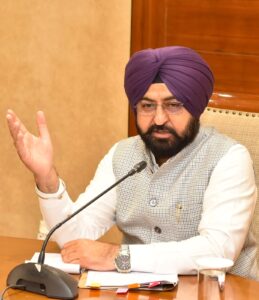
Punjab Revenue Minister S. Hardeep Singh Mundian today said that Easy Registry marks a significant milestone in the State Government’s efforts to transform property registration into a faster, simpler, transparent and citizen-friendly public service.
Launched by Chief Minister S. Bhagwant Singh Mann led Punjab Government in July 2025 as a pilot project in Mohali, Easy Registry has fundamentally changed the way citizens access property registration services. The initiative has shifted the process from a largely office-dependent system to an online and time-bound model while reducing unnecessary physical visits and direct points of contact.
- Hardeep Singh Mundian said that the government’s focus has been to make property registration a service that citizens can access with greater convenience and confidence. “Easy Registry is not merely a digital platform. It is a governance reform designed around the convenience, dignity and rights of the citizen,” he said.
The impact of Easy Registry is also visible in beneficiary feedback. Two rounds of surveys conducted across districts and villages where the portal is operational covered 6,623 token-holders, including 1,737 beneficiaries in Survey 1.0 and 4,886 in Survey 2.0.
He informed that the cumulative findings of both surveys show strong public satisfaction with the new system. As many as 93% of beneficiaries were satisfied with the new registration process while 93% said their registry was completed on the scheduled appointment date. Similarly, 90% faced no issue at any stage of the process while 93% of cases cleared pre-scrutiny without any objection. Further, 94% said they faced no pressure to make any extra payment.
According to beneficiary feedback, most applicants have been able to complete their registration in approximately 35 minutes on their appointment day. The appointment and token mechanism has reduced waiting time inside offices while the 48-hour scrutiny window has helped minimise repeated visits. WhatsApp status updates have further reduced dependence on agents for tracking applications and in most cases the registered deed can be collected in a single visit.
- Mundian said that these figures provide an important measure of the change brought about by Easy Registry during these 14 months. The survey feedback also shows that the reforms have improved both predictability and public confidence in the registration process.
- Mundian said that Easy Registry has sought to address the key pain points associated with property registration by combining technology with administrative reforms.
From online deed preparation and fee payment to pre-scrutiny, FIFO file processing, digital Fard generation, eKYC verification, token management and WhatsApp communication, the system has created multiple layers of transparency and accountability.
He said that the Punjab Government is committed to strengthening citizen-centric governance and ensuring that public services are delivered with greater speed, fairness and transparency.
Under the earlier system, the Revenue Minister said, citizens were required to approach the Sub-Registrar office having jurisdiction over the location of the property. Easy Registry has removed this constraint by allowing registration at any Sub-Registrar office within the district.
- Mundian said that this cross-office access has provided citizens with greater freedom of choice while reducing dependence on a particular office or official. The reform has also helped dismantle the conditions that could facilitate favouritism and unnecessary influence.
*FIRST-IN-FIRST-OUT SYSTEM BRINGS ORDER AND FAIRNESS*
Easy Registry has introduced a First-In-First-Out (FIFO) mechanism for handling files. Instead of files being picked up randomly, applications are processed in the order in which they are received.
- Mundian said that the reform has brought greater predictability and fairness to the process by ensuring that citizens do not have to depend on personal influence or repeated visits to know when their case will be taken up.
*48-HOUR SCRUTINY WINDOW CURBS DELAYS*
A structured and time-bound objection mechanism has been introduced under Easy Registry. Applicant-related objections are resolved before the case reaches the Registrar’s office so that citizens do not waste time during their scheduled visit.
Where an objection is raised by the Registrar, it has to be communicated within 48 hours through the system. Such objections are subject to oversight by the Deputy Commissioner or Sub-Divisional Magistrate to ensure that they are genuine and properly addressed.
The Cabinet Minister said that fixing a clear scrutiny timeline has substantially reduced the repeated to-and-fro that citizens earlier faced during property registration. As many as 93% of cases cleared pre-scrutiny without any objection.
*DEED DRAFTING NO LONGER DEPENDENT ON MIDDLEMEN*
Easy Registry has also changed the way sale deeds are prepared. Citizens can now choose from three options: Do It Yourself online deed drafting, assistance at dedicated deed assistance counters or doorstep services through Seva Sahayaks.
This has reduced dependence on private deed-writers and lawyers for routine drafting requirements while giving citizens greater control over the registration process.
*ONE TRANSACTION, 25 BANKS AND INSTANT FEE CALCULATION*
He said that the new system has streamlined the payment of stamp duty and registration fees. The applicable fees are calculated instantly and citizens can make payment online through a single transaction using an integrated gateway supporting 25 banks.
- Mundian said that the reform has eliminated the need for multiple bank visits and reduced ambiguity in fee calculations. The combination of pre-scrutiny and single-window payment has also helped reduce the need for refund requests.
*WHATSAPP UPDATES KEEP CITIZENS INFORMED*
Easy Registry has introduced automatic WhatsApp acknowledgements at different stages of the registration process. Applicants can track the progress of their case without having to depend on agents or make repeated visits to government offices.
The system also facilitates online complaints and direct WhatsApp reporting of any demand for a bribe with such complaints being escalated to the Deputy Commissioner.
The Revenue Minister said that this direct communication channel has strengthened accountability while placing the citizen at the centre of the service delivery process. As many as 94% said they faced no pressure to make any extra payment.
*DIGITAL FARD NOW GENERATED AUTOMATICALLY*
A major technological reform under Easy Registry is the integration of the Jamabandi Portal with the Easy Registry Portal. The integration enables automatic generation of a QR Code-enabled Digital Fard. Applicants no longer need to upload the Fard manually. The system provides authenticated and updated land records while reducing the possibility of forged or tampered documents. The reform has also reduced processing time and unnecessary repeat visits by applicants.
*CONSENT-BASED e-KYC STRENGTHENS SECURITY*
Easy Registry has introduced consent-based electronic KYC verification at the Sub-Registrar level. With the consent of the concerned parties, their identities can be verified electronically.
This provides an additional safeguard against fraudulent or impersonated registrations while ensuring that the persons participating in the registration process are genuine, he added.
*INTEGRATED TOKEN SYSTEM CUTS WAITING TIME*
- Mundian said that the Integrated Token Management System gives priority to citizens who have scheduled appointments and complete documentation. He said that the system has helped reduce waiting time within registration offices and has made service delivery more uniform across both urban and rural offices. According to beneficiary feedback, most applicants have been able to complete their registration in approximately 35 minutes on their appointment day. As many as 93% said their registry was completed on the scheduled appointment date, he added.
*REGISTRATION OFFICES GET A CITIZEN-FRIENDLY MAKEOVER*
Alongside digital reforms, registration offices have also been upgraded to provide citizens with a more comfortable and dignified experience. Modern waiting areas, professional reception facilities and a more citizen-friendly office environment have been introduced as part of the broader transformation.
The Cabinet Minister said that the government’s objective is not limited to digitising a procedure but also to improve the overall experience of citizens visiting government offices.
*AROUND 10 LAKH DOCUMENTS REGISTERED SINCE ITS INITIATION*
Since the initiation of Easy Registry system in July 2025, a total of 9,87,425 documents have been registered across Punjab till September 8, 2026, which showed the wide adoption of the new registration system by citizens across the State.
*EASY REGISTRY EMERGES AS A REPLICABLE GOVERNANCE MODEL*
- Hardeep Singh Mundian said that the transformation brought by Easy Registry goes beyond property registration as it provides a framework for redesigning public services around the needs of citizens. The initiative has replaced avoidable physical interfaces with digital processes while retaining necessary human assistance through deed assistance counters and Seva Sahayaks. With fixed timelines, digital records, direct communication and mechanisms for grievance reporting, Easy Registry has created a service delivery model that can be replicated across departments and jurisdictions.
- Mundiansaid that the Punjab Government would continue to strengthen technology-driven governance so that citizens can access government services with minimum inconvenience and maximum transparency.